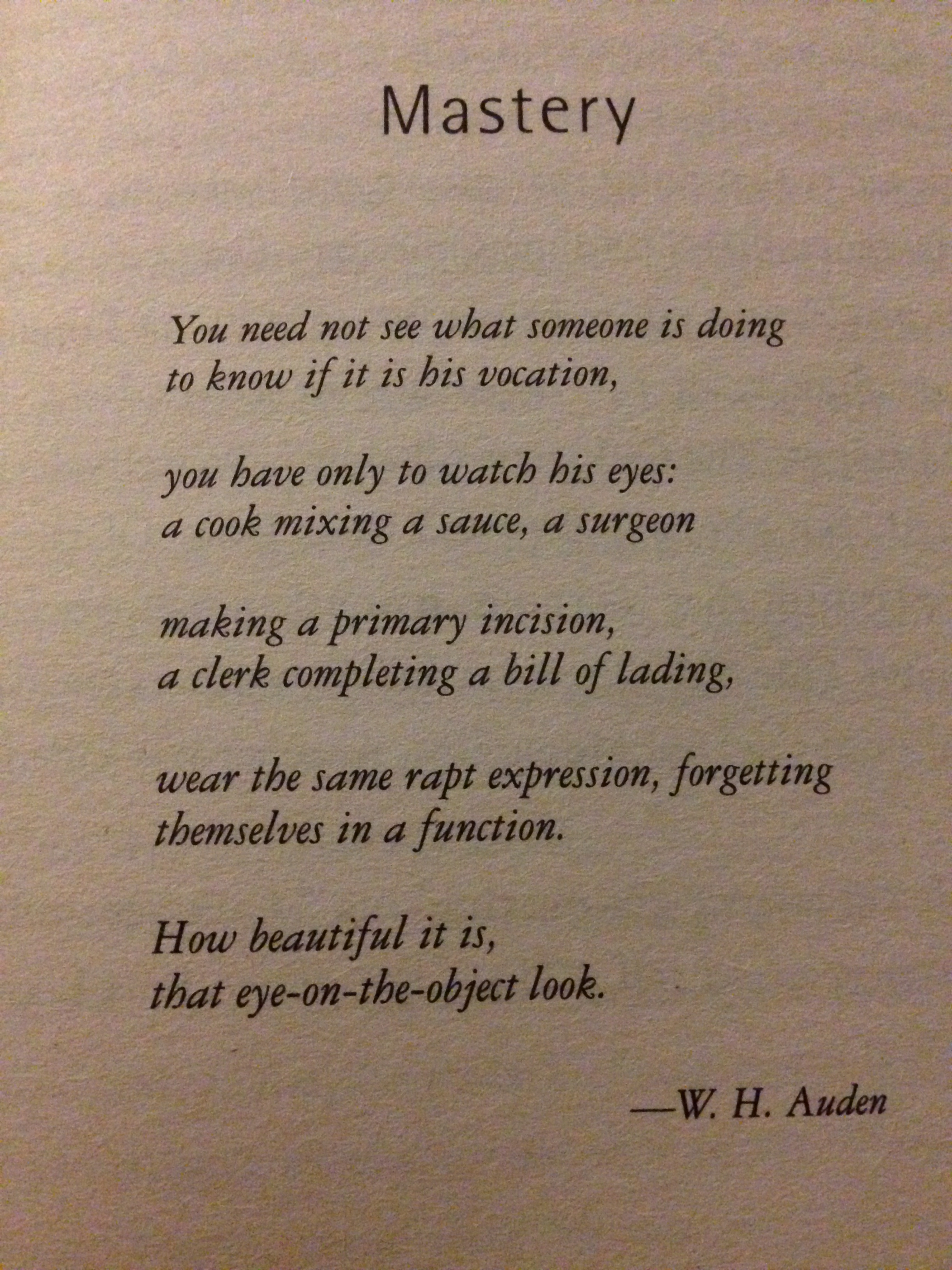
Have been reading Robert Greene’s ‘Mastery’. It’s a very interesting and insightful book. Uses a system to categorise the steps involved in becoming a master of anything.
Definitely goes onto the ‘highly recommended’ list.
I’ve noticed in the last few days my brain is racing between a huge range of thoughts.
I haven’t done much differently in terms of daily routines. Not drinking more coffee than normal, and drinking less alcohol than I have in recent times.
The ability to focus on achieving one task without three others popping into my head has escaped me.
I’m taking note of the things that pop up in a notebook. It’s all mundane, normal stuff. Nothing groundbreaking.
Maybe it’s a sign that I have a lot of things to do in life in general (this is a long list), or maybe my brain has started to fire in different ways.
It could be the start of some new pathways, too. There could be a shiny thought among the mundane ones somewhere on this journey.
Keeping myself in listening mode right now is important. There will be a house move in the near future, and some travel towards the end of the year. A change in seasons is upon us as the sun comes out and the temparature rises.
Time to tune in and listen to what’s going on in my brain.
There has been a lot of upheaval in the last few weeks. This could be my brain’s way of resetting.
It’s easy to whinge and moan about not having enough.
Money, time, friends, skills. These things don’t turn up by accident.
A plan will get you on the path to making good things happen.
They are never set in stone. They can change as life takes you in different directions. Reviewing plans is a part of the process of staying on the right track.
But you’ve gotta have one. Avoid it and the weeds will overtake the flowers in your metaphorical garden.
Your direction and purpose will be unclear.
Spend a few minutes working out what you’re going to do today and write it down. This is where it starts.
This applies to many things, however, the core of this premise is its applicability to your work, no matter what it is.
Be so good that your colleagues, clients and bosses have to take notice of the work you do.
It might be the way you do it. The level of quality that you are reaching every time you send an email, for example. The style of your communications. The way you listen.
Or it could be a technical proficiency. Something you’ve honed over many years of practice and repetition.
Whatever it is, work as hard as you can on making it a little better every day.
It is not wasted time. The effort will stand up under pressure.
Sometimes this stuff is drowned out by the policiticans that inhabit every workplace. The game-players. The ones who will burn anyone to get what they feel they deserve.
In general – and I have seen this play out over time – those with the skills become dependable, reliable, and essential to leaders when they’re making their picks.
The unknowns of the future are with us no matter what is going on in our lives.
Even if things are rolling along with no issues, there could be a curve in the road ahead.
When things are particularly bad, when the road is blocked in either direction and you’re stuck, the dark seems to be a bit darker. Small tasks are hard. Everything seems like an effort.
I’m finding myself short of breath in public spaces. This is a new thing. Not something I’ve ever had before.
There is a lot of fear inside me about the future. I’m being forced into change that I hadn’t planned. I don’t have any control over it.
Not much can be done but knuckle down and focus on myself.
I’m being told that these feelings will pass. That things will change eventually with the passing of time.
The things I say to other people going through a hard time, like ‘hang in there’, are all coming back to me.
I know they’re right, but I don’t believe it in my current state of mind.
William Bridges talks about transitions. I was given his book by a mentor 25 years ago. At the time, I was fumbling my way out of university and into a career, constantly complianing at how long it was taking to pan out.
The book was ‘The Way of Transition’. I have kept it close ever since. It contains clarity at times of stress, confusion or change.
When I first read the book, I remember telling friends I felt like I was in a washing machine – soak, suds and then spin. And the spin cycle was going on for a long, long time.
Sleep wasn’t good. My head was playing tricks on me. The basics of life were out of sync.
I learned that this is the neutral zone. The ‘waste land’ Bridges talks of where there is no life, no growth. Just vast, empty space.
It’s the place we go through when life happens and change is forced upon us.
It’s a harsh landscape. There are no signposts or pathways. A bit of gravel here and there if you’re lucky.
Not much is clear in any direction, and nothing you can do will change this.
All you can do is wait. Things will eventually offer themselves up. Like Dorothy in the Wizard of Oz, you’ll find your way back to Kansas, but it’s not the same Kansas you left.
“So the thing to do when working on a motorcycle, as is in any other task, is to cultivate the peace of mind which does not separate one’s self from one’s surroundings. When that is done successfully, then everything else follows naturally. Peace of mind produces right values, right values produce right thoughts. Right thoughts produce right actions and right actions produce work which will be a material reflection for others to see of the serenity at the centre of it all.”
Listened to an interview with the band and Howard Stern last night.
These guys are workers. The play their music hard, day after day. They hit the rehearsal room and work.
The things we see – the shows and the energy – are the peak of their powers. Day to day, these guys are trying new things. Making mistakes, ploughing through new stuff and finding the gold.
Flea said that when they go on stage for any show, they go at it as if there’s an axe murderer waiting for them the minute the show is over who’s going to kill them all.
They burn the boats. They crucify on stage, killing it. The crowd receives the sacrifice of their energy.
Anything you want to do well could benefit from the same approach.
Don’t complain that things aren’t working out for you unless you attack them in the same way.
It helps to know the things you’re not so good at. The things you should work on. The things you know you should deal with.
They have a tendency to get ‘lost in the fog.’ Piles of paper cover those lists of once important and urgent tasks you wanted to get done but never got around to.
It may not feel comfortable to write these things down. Seeing your weaknesses, your blind-spots, on the page can be challenging.
It’s in this type of awareness that opportunities for growth live.
They could be learning opportunities. Skills you could brush-up on, or new ways to pass the time.
But they be complete attitude shifts, or changes to ways of working. The recognition that you talk too much at certain times could, for example, open up a new line of thinking and action.
The benefits on a daily basis may not be immediately visible or measurable. Be consistent and they soon will be.